Fed Chair Warsh Told Markets to Read Data. They Read Him Instead.

Fed Chair Warsh Told Markets to Read Data. They Read Him Instead.
By:Ilya Spivak
Traders came away convinced that rate hikes are imminent after Fed Chair Warsh spoke at Jackson Hole, but economic data points the other way. Now what?
- Gold gave ground on Friday but has since held its footing, while the dollar has already started backpedaling
- Inflation expectations have decoupled from crude oil, undercutting the main argument for tightening
- A week of business surveys and Friday’s payrolls report will test whether the markets’ hawkish confidence survives
Markets are digesting a hawkish weekend. Friday brought fireworks after Federal Reserve Chair Kevin Warsh spoke at the annual Jackson Hole symposium, with gold slumping, the dollar surging against a battered euro and front-end Treasury yields climbing. Stocks were the exception then and stayed quiet at the start of the new week.
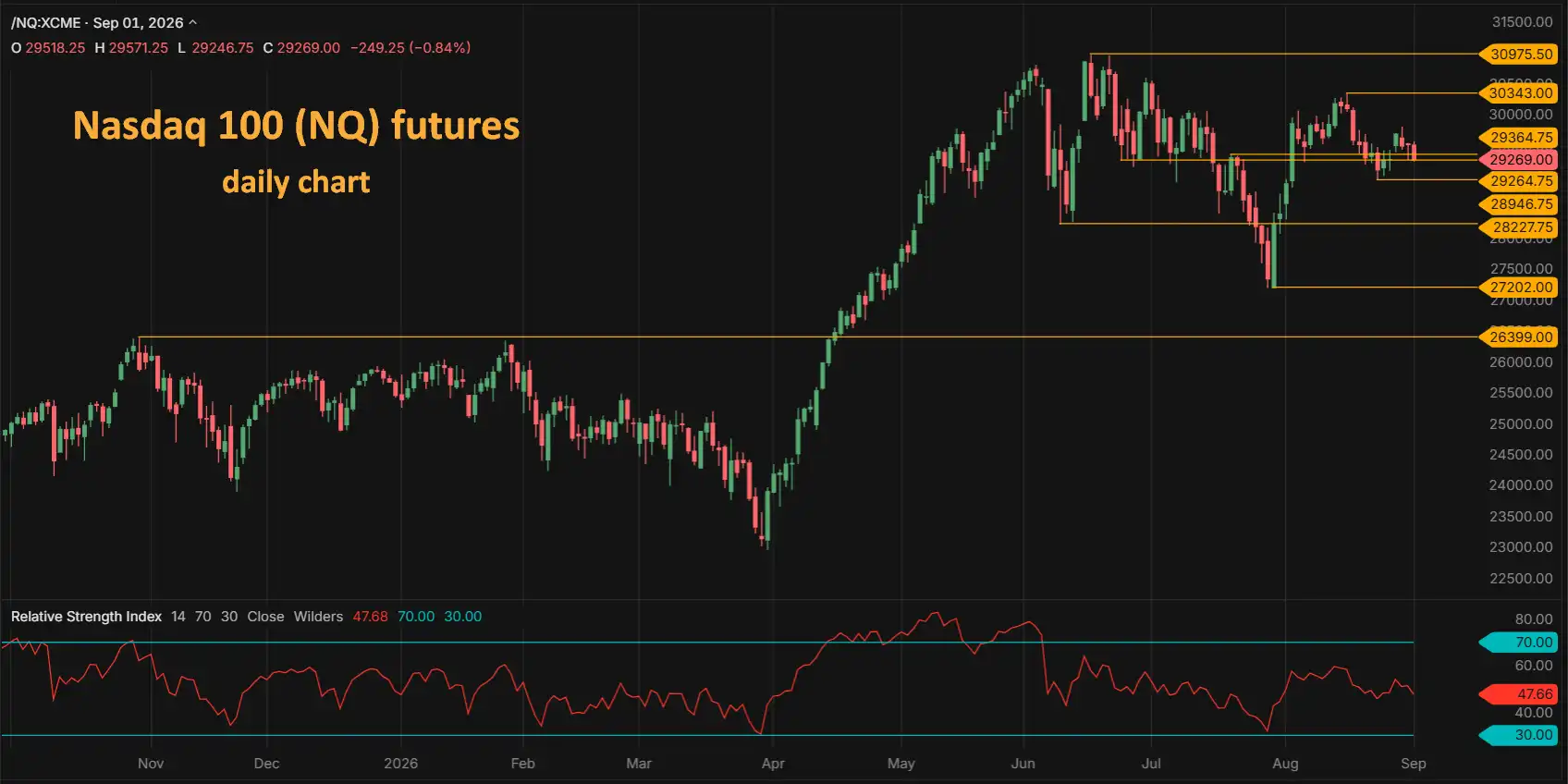
The bellwether S&P 500 is drifting slightly softer while the tech-heavy Nasdaq 100 meanders at the same levels it has occupied for weeks. An attempted slide last week was stopped in its tracks as Nvidia (NVDA) won over traders with its earnings report. Energy was the lone sector on the upswing Monday, with everything else lower, after the US and Iran exchanged fire over the weekend for the first time since July.
Tellingly, Friday’s conviction has not carried into this week. Gold gapped down at the weekly trading open but stalled almost instantly thereafter. The dollar has done worse, giving back some of Friday’s rally. Crude oil gapped higher too and rallied, but the move kept prices within the range held since the US-Iran war began. What’s more, narrowing highs and lows in recent weeks still point to a kind of anchoring around a new wartime normal for prices. For a market ostensibly spooked by a hawkish US central bank and faced with renewed shooting in the Persian Gulf, remarkably little has actually moved.
Do we really need a rate hike now?
The markets’ priced in outlook for Fed monetary policy swung sharply as Warsh spoke. A rate hike in September is now seen as more likely than not, a move by December looks close to settled, and the odds of the Fed doing nothing at all this year have collapsed to around 11%. Beyond January the picture fans out again into genuine uncertainty, albeit with a slight bias toward one more rate hike before 2027 is out.
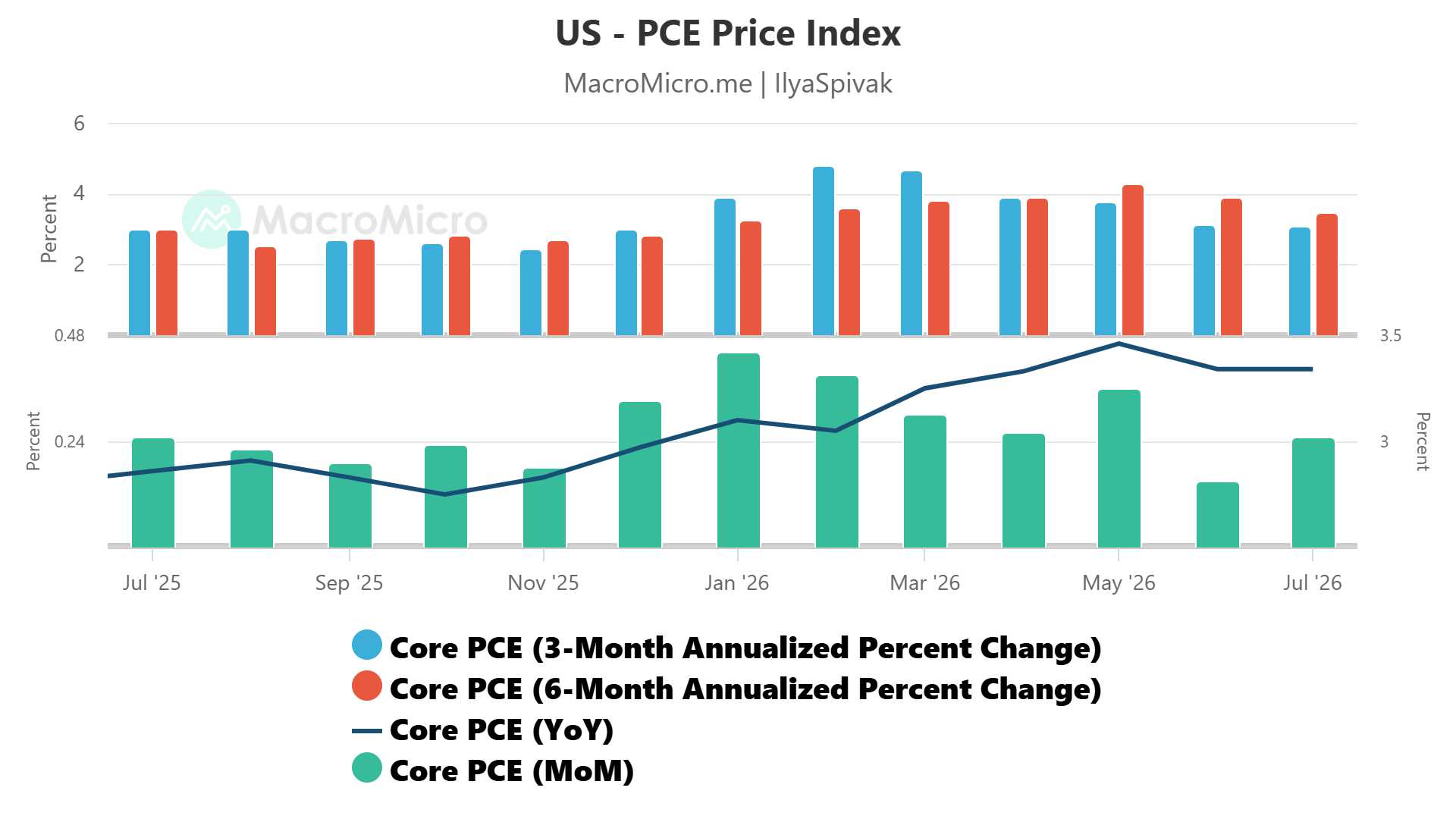
The trouble is that the evidence keeps pointing elsewhere. Citigroup’s economic surprise index shows US data releases increasingly disappointed relative to forecasts through August. The Atlanta Fed’s GDPNow model has handily shown that this string of mostly soggy releases translates into weaker growth prospects. Meanwhile, the three- and six-month annualized trends in the Fed’s favored PCE inflation gauge have pointed lower since March and June, respectively. The headline year-on-year reading looks stalled at elevated levels, yet underneath it prices are moving the Fed’s way.
There is also the question of why the Fed would tighten at all. Surely the central bank does not intend to crush demand for oil by kneecapping the economy as the way to deal with a wartime supply shock. So, the strongest argument for a hike was always that it would check inflation expectations, preventing the price spike from becoming embedded there. However, the markets’ outlook for price growth seems to have decoupled from crude’s geopolitical gyrations. Oil prices has rebounded since July, yet the five- and ten-year breakeven rates embedded in Treasury bonds have stayed pinned. As rate hikes are considered, that begs the question.
What Fed Chair Warsh actually asked for
The irony in Friday’s reaction to Warsh’s speech is that his steadfast objection to forward guidance is that it teaches markets to trade the Fed instead of the economy. He wants investors to read incoming data themselves, express a view in policy pricing, and let officials observe that view, rather than announcing a destination and watching everyone ignore the breadcrumbs on the way there. He has said so plainly and frequently, warning that markets should not indulge a regime in which participants look primarily to the Fed for their next trade.
For their part, traders responded by doing exactly what Warsh wants them to unlearn: parsing his words and repricing hard on the interpretation. One might think that – had markets followed Warsh’s idealized lead – they would have read the latest batch of soggy data and priced in fewer hikes, not more.
The week ahead offers plenty of fodder to test that view. Purchasing managers index (PMI) surveys of US business activity from the Institute of Supply Management (ISM) arrive first, followed by the August edition of official labor market data. Forecasts see 58,000 jobs added following July’s shock decline, a thin number by most measures, with wage growth easing toward 3%. Should the week bring more of the downbeat news-flow that August delivered, the markets’ hawkish take on Warsh will start to look like a misreading. The rethink may already be waiting in the wings.
Ilya Spivak, tastylive Head of Global Macro, has over 15 years of experience in trading strategy. He specializes in identifying thematic moves in currencies, commodities, interest rates and equities. He hosts Macro Money and co-hosts Overtime, Monday-Thursday. @Ilyaspivak
For live daily programming, market news and commentary, visit tastylive.com or @tastyliveshow on YouTube
Trade with a better broker, open a tastytrade account today. tastylive, Inc. and tastytrade, Inc. are separate but affiliated companies.
Options involve risk and are not suitable for all investors. Please read Characteristics and Risks of Standardized Options before deciding to invest in options.
tastylive content is created, produced, and provided solely by tastylive, Inc. (“tastylive”) and is for informational and educational purposes only. It is not, nor is it intended to be, trading or investment advice or a recommendation that any security, futures contract, digital asset, other product, transaction, or investment strategy is suitable for any person. Trading securities, futures products, and digital assets involve risk and may result in a loss greater than the original amount invested. tastylive, through its content, financial programming or otherwise, does not provide investment or financial advice or make investment recommendations. Investment information provided may not be appropriate for all investors and is provided without respect to individual investor financial sophistication, financial situation, investing time horizon or risk tolerance. tastylive is not in the business of transacting securities trades, nor does it direct client commodity accounts or give commodity trading advice tailored to any particular client’s situation or investment objectives. Supporting documentation for any claims (including claims made on behalf of options programs), comparisons, statistics, or other technical data, if applicable, will be supplied upon request. tastylive is not a licensed financial adviser, registered investment adviser, or a registered broker-dealer. Options, futures, and futures options are not suitable for all investors. Prior to trading securities, options, futures, or futures options, please read the applicable risk disclosures, including, but not limited to, the Characteristics and Risks of Standardized Options Disclosure and the Futures and Exchange-Traded Options Risk Disclosure found on tastytrade.com/disclosures.
tastytrade, Inc. ("tastytrade”) is a registered broker-dealer and member of FINRA, NFA, and SIPC. tastytrade was previously known as tastyworks, Inc. (“tastyworks”). tastytrade offers self-directed brokerage accounts to its customers. tastytrade does not give financial or trading advice, nor does it make investment recommendations. You alone are responsible for making your investment and trading decisions and for evaluating the merits and risks associated with the use of tastytrade’s systems, services or products. tastytrade is a wholly-owned subsidiary of tastylive, Inc.
tastytrade has entered into a Marketing Agreement with tastylive (“Marketing Agent”) whereby tastytrade pays compensation to Marketing Agent to recommend tastytrade’s brokerage services. The existence of this Marketing Agreement should not be deemed as an endorsement or recommendation of Marketing Agent by tastytrade. tastytrade and Marketing Agent are separate entities with their own products and services. tastylive is the parent company of tastytrade.
tastyfx, LLC (“tastyfx”) is a Commodity Futures Trading Commission (“CFTC”) registered Retail Foreign Exchange Dealer (RFED) and Introducing Broker (IB) and Forex Dealer Member (FDM) of the National Futures Association (“NFA”) (NFA ID 0509630). Leveraged trading in foreign currency or off-exchange products on margin carries significant risk and may not be suitable for all investors. We advise you to carefully consider whether trading is appropriate for you based on your personal circumstances as you may lose more than you invest.
tastycrypto is provided solely by tasty Software Solutions, LLC. tasty Software Solutions, LLC is a separate but affiliate company of tastylive, Inc. Neither tastylive nor any of its affiliates are responsible for the products or services provided by tasty Software Solutions, LLC. Cryptocurrency trading is not suitable for all investors due to the number of risks involved. The value of any cryptocurrency, including digital assets pegged to fiat currency, commodities, or any other asset, may go to zero.
© copyright 2013 - 2026 tastylive, Inc. All Rights Reserved. Applicable portions of the Terms of Use on tastylive.com apply. Reproduction, adaptation, distribution, public display, exhibition for profit, or storage in any electronic storage media in whole or in part is prohibited under penalty of law, provided that you may download tastylive’s podcasts as necessary to view for personal use. tastylive was previously known as tastytrade, Inc. tastylive is a trademark/servicemark owned by tastylive, Inc.
Your privacy choices