Stock Market Before Fed Meeting, AI Giants’ Earnings: Why So Sad?

Stock Market Before Fed Meeting, AI Giants’ Earnings: Why So Sad?
By:Ilya Spivak
The stock market looked miserable even as oil prices sank after the US and Iran dialed back their war. A huge batch of AI-powered earnings and a critical Fed rate decision loom ahead.
- Stocks dripped downward even as oil plunged, a sign the war trade is no longer the focus for the markets
- The hyperscalers’ vast AI spending has driven real interest rates to their highest in more than a year
- A Fed decision and four more big-tech earnings reports this week could decide which way the tension breaks
The stock market leaked lower even as crude oil prices cratered as the US and Iran stepped back from the brink of escalation. That’s the kind of news that, under the “war trade” dynamics that has driven markets for most of the year, should have been a gift for Wall Street. The bellwether S&P 500 gapped higher at the weekly trading open, then tumbled to erase those gains to finish the session flat. The tech-heavy Nasdaq 100 fared even worse, issuing its lowest close in nearly three months. Something other than the war now seems to be front of mind for traders.
Good news that stocks no longer want
Signs of regime change were most clearly on display last week after a solid earnings report from Alphabet, the parent of Google. The company crushed profit forecasts, beating earnings-per-share (EPS) forecasts by more than 200%, and pledged even heavier spending on artificial intelligence (AI) capacity. In April or May, markets would have almost certainly seized on that as fuel for the rally. This time they took the stock to the woodshed. When a blowout and a promise of more investment are treated as bad news, the market is clearly running on a different logic than it was a few months ago.
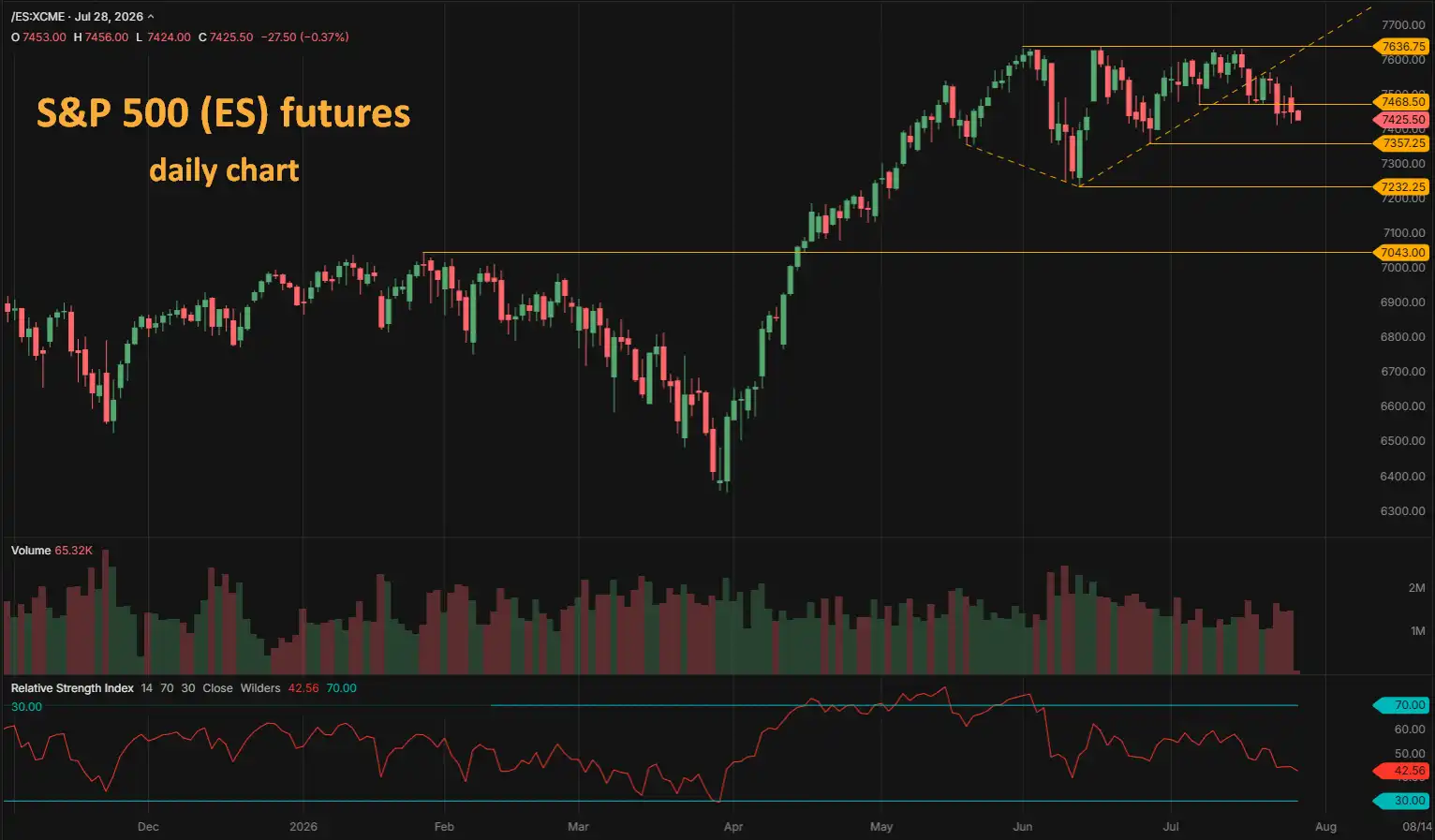
The same story has shown up in markets outside of equities. Gold has pointedly stopped falling since the start of July, refusing to break down even as crude spiked and the Strait of Hormuz choked shut — conditions that, earlier in the war, would have sent the non-yielding metal reeling. The US dollar likewise declined to rally with any conviction. These are the assets that traded the war most faithfully, and they have stopped listening to it. The question that has been building for weeks is what they are listening to instead.
The AI boom is now its own inflation problem
The answer binds the AI story and the inflation story into one. When the hyperscalers pledged to pour some $750 billion into the AI buildout this year, they promised to flood with capital an economy whose business-investment engine was already running white-hot, expanding above a 10% annualized rate. The market’s response was to demand compensation for the inflation all that spending implies and real interest rates, the cost of borrowing after inflation, began to climb. The iShares TIPS Bond ETF (TIP), which tracks inflation-protected Treasuries, has since fallen sharply, implying the highest real rates since the bond market panic touched off by last year’s fraught tariff rollout.
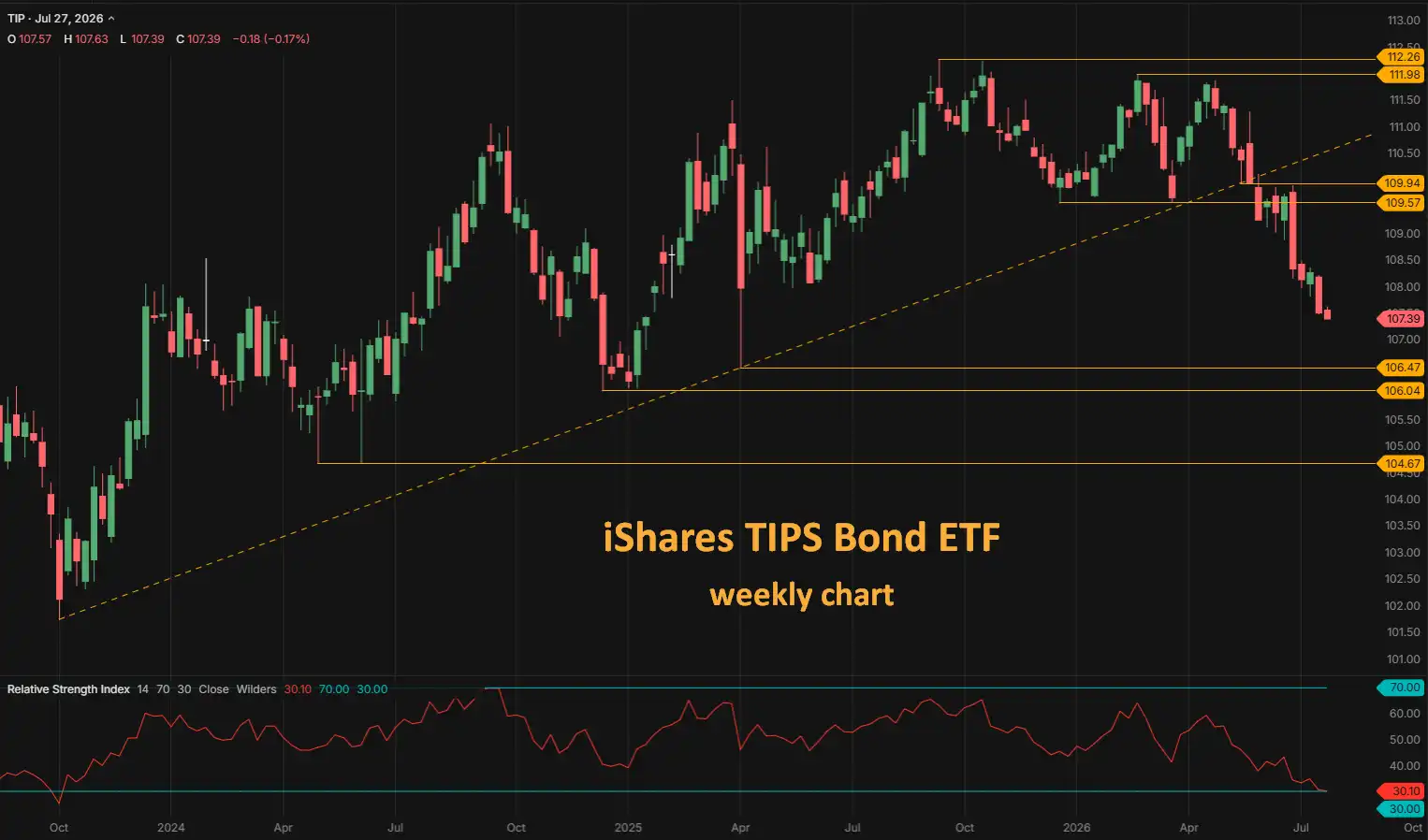
This reframes the entire cross-asset picture. Bonds falling, gold sliding, and the dollar firming since April all looked like the “war trade”, yet now they appear more like an inflation response of a different kind, driven by the AI capex boom rather than by oil. And this is the kind of inflation the Federal Reserve can actually act on. A quarter-point hike does nothing to alleviate a wartime oil shock, but it can surely lean against a runaway investment cycle. In effect, the market has been doing the tightening for the central bank, pushing the real cost of money higher on its own. When stocks diverged from bonds and gold three months ago, they looked like a separate narrative had taken hold. Now, that change in behavior seems more like a market-wide rethink in disguise.
Higher real rates are already biting
That matters because a rise in the real cost of money is kryptonite for economic growth, making every dollar of activity more expensive to finance. The strain is already visible in the Atlanta Fed’s GDPNow model, which now pegs second-quarter output growth at just 1.6%, down from 2.1% and sliding further from 1.7% last week after soft durable goods orders data. The tightening the market imposed is choking the economy in real time.
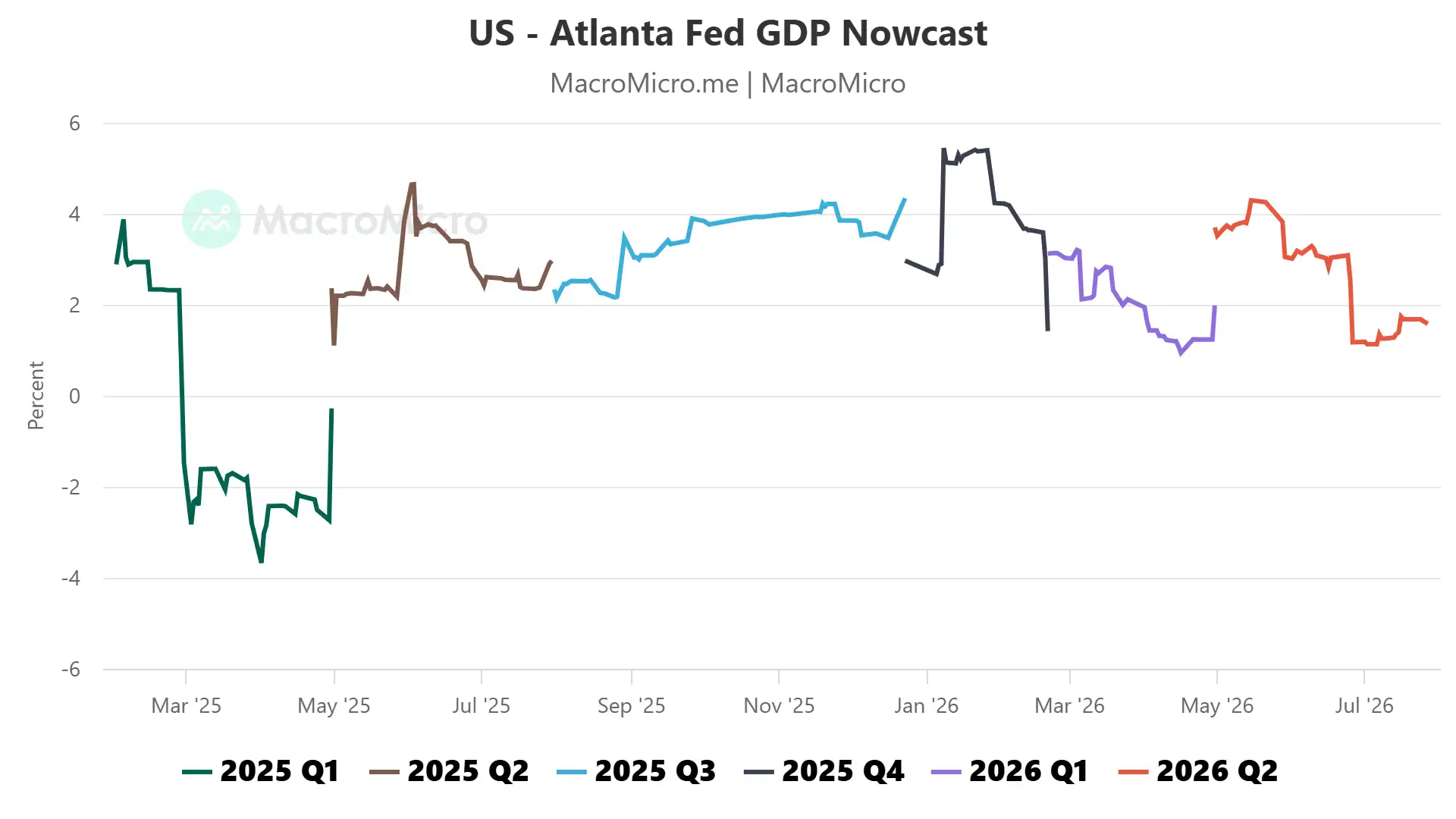
This also explains the market’s eerie calm on inflation. Breakeven inflation expectations have stayed pinned near their lows for the year even as oil surged again this month, and gold has refused to crack lower. The reason may be that markets have already moved on: the inflation scare has come and gone, real rates did the tightening it called for, and the economy is quietly buckling underneath. First-quarter growth leaned almost entirely on that white-hot investment boom while the consumer barely contributed by comparison, an economy overheating at low speed. If the boom that generated the inflation pickup is now strangling growth through the real rates it summoned, the Fed’s next move may end up being a cut forced by an economy weakening beneath the surface, rather than the hike markets are bracing for.
A pivotal week for the standoff
This week will be a powerful test of this arrangement. The Fed announces policy in a decision that markets see leaning toward no change, though futures markets still price a roughly 38% chance of a 25-basis-point (bps) interest rate hike. That’s enough that whichever way it lands, a meaningful slice of traders will have to reposition. Alongside it, four more of the megacap technology giants — Microsoft, Meta, Apple, and Amazon — report earnings.
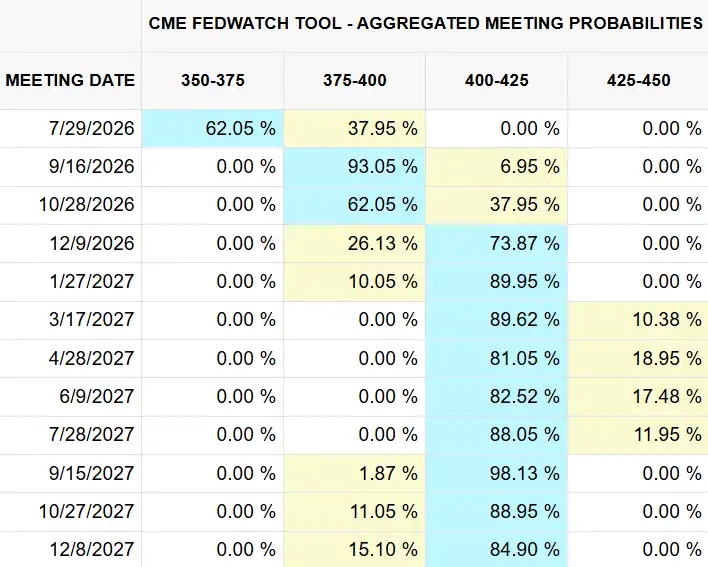
If those reports follow Alphabet’s script, delivering blockbuster numbers and still meatier capex plans, the market may treat them as fresh fuel for real rates and another turn of the screw on growth rather than as triumphs. That is the trap now closing in on Wall Street: the AI frenzy that powered the climb to record highs has turned inward, and the same spending that once thrilled investors now reads as a threat. Should the data keep softening and the Fed dither, an emerging growth scare may lift bonds and gold, weigh on the dollar, and leave stocks, still priced for a boom, with the most to lose.
Ilya Spivak, tastylive Head of Global Macro, has over 15 years of experience in trading strategy. He specializes in identifying thematic moves in currencies, commodities, interest rates and equities. He hosts Macro Money and co-hosts Overtime, Monday-Thursday. @Ilyaspivak
For live daily programming, market news and commentary, visit tastylive.com or @tastyliveshow on YouTube
Trade with a better broker, open a tastytrade account today. tastylive, Inc. and tastytrade, Inc. are separate but affiliated companies.
Options involve risk and are not suitable for all investors. Please read Characteristics and Risks of Standardized Options before deciding to invest in options.
tastylive content is created, produced, and provided solely by tastylive, Inc. (“tastylive”) and is for informational and educational purposes only. It is not, nor is it intended to be, trading or investment advice or a recommendation that any security, futures contract, digital asset, other product, transaction, or investment strategy is suitable for any person. Trading securities, futures products, and digital assets involve risk and may result in a loss greater than the original amount invested. tastylive, through its content, financial programming or otherwise, does not provide investment or financial advice or make investment recommendations. Investment information provided may not be appropriate for all investors and is provided without respect to individual investor financial sophistication, financial situation, investing time horizon or risk tolerance. tastylive is not in the business of transacting securities trades, nor does it direct client commodity accounts or give commodity trading advice tailored to any particular client’s situation or investment objectives. Supporting documentation for any claims (including claims made on behalf of options programs), comparisons, statistics, or other technical data, if applicable, will be supplied upon request. tastylive is not a licensed financial adviser, registered investment adviser, or a registered broker-dealer. Options, futures, and futures options are not suitable for all investors. Prior to trading securities, options, futures, or futures options, please read the applicable risk disclosures, including, but not limited to, the Characteristics and Risks of Standardized Options Disclosure and the Futures and Exchange-Traded Options Risk Disclosure found on tastytrade.com/disclosures.
tastytrade, Inc. ("tastytrade”) is a registered broker-dealer and member of FINRA, NFA, and SIPC. tastytrade was previously known as tastyworks, Inc. (“tastyworks”). tastytrade offers self-directed brokerage accounts to its customers. tastytrade does not give financial or trading advice, nor does it make investment recommendations. You alone are responsible for making your investment and trading decisions and for evaluating the merits and risks associated with the use of tastytrade’s systems, services or products. tastytrade is a wholly-owned subsidiary of tastylive, Inc.
tastytrade has entered into a Marketing Agreement with tastylive (“Marketing Agent”) whereby tastytrade pays compensation to Marketing Agent to recommend tastytrade’s brokerage services. The existence of this Marketing Agreement should not be deemed as an endorsement or recommendation of Marketing Agent by tastytrade. tastytrade and Marketing Agent are separate entities with their own products and services. tastylive is the parent company of tastytrade.
tastyfx, LLC (“tastyfx”) is a Commodity Futures Trading Commission (“CFTC”) registered Retail Foreign Exchange Dealer (RFED) and Introducing Broker (IB) and Forex Dealer Member (FDM) of the National Futures Association (“NFA”) (NFA ID 0509630). Leveraged trading in foreign currency or off-exchange products on margin carries significant risk and may not be suitable for all investors. We advise you to carefully consider whether trading is appropriate for you based on your personal circumstances as you may lose more than you invest.
tastycrypto is provided solely by tasty Software Solutions, LLC. tasty Software Solutions, LLC is a separate but affiliate company of tastylive, Inc. Neither tastylive nor any of its affiliates are responsible for the products or services provided by tasty Software Solutions, LLC. Cryptocurrency trading is not suitable for all investors due to the number of risks involved. The value of any cryptocurrency, including digital assets pegged to fiat currency, commodities, or any other asset, may go to zero.
© copyright 2013 - 2026 tastylive, Inc. All Rights Reserved. Applicable portions of the Terms of Use on tastylive.com apply. Reproduction, adaptation, distribution, public display, exhibition for profit, or storage in any electronic storage media in whole or in part is prohibited under penalty of law, provided that you may download tastylive’s podcasts as necessary to view for personal use. tastylive was previously known as tastytrade, Inc. tastylive is a trademark/servicemark owned by tastylive, Inc.
Your privacy choices