Stocks Tried to Bounce and Blew It. What Are Markets Afraid Of?

Stocks Tried to Bounce and Blew It. What Are Markets Afraid Of?
By:Ilya Spivak
Stocks failed to sustain a bounce as US midterm voting got underway, then seesawed wildly as early results pointed to a Democratic landslide. Australia’s “dovish” rate hike may hint at what bond markets have long feared.
- Stocks struggled to recover as US midterm elections got underway, then plunged amid signs of a Democratic onslaught, only to seesaw back the other way
- The RBA raised rates to an 18-year high but forecast slower growth and dropped its readiness to hike again
- Markets now price just one more Fed rate hike in 2027 despite upbeat US jobs and manufacturing data
Markets had a chance to stage a rebound at the start of the week, and they are struggling to take it. The S&P 500 tried to bounce after Friday’s selloff, failed spectacularly, and now sits pinned within a hair of last week’s low. The tech-heavy Nasdaq 100 is similarly stuck after skidding into the lowest close since late July on Monday.
That marks a shift. In each of the past two weeks, stocks steadied ahead of major event risk and sold off once it passed. This time, they are not waiting. Macro event risk has inspired no greater deference. Traders might have waited to see US midterm election results or October’s US jobs report before committing in earnest one way or another. Such nuance now seems lost on them.
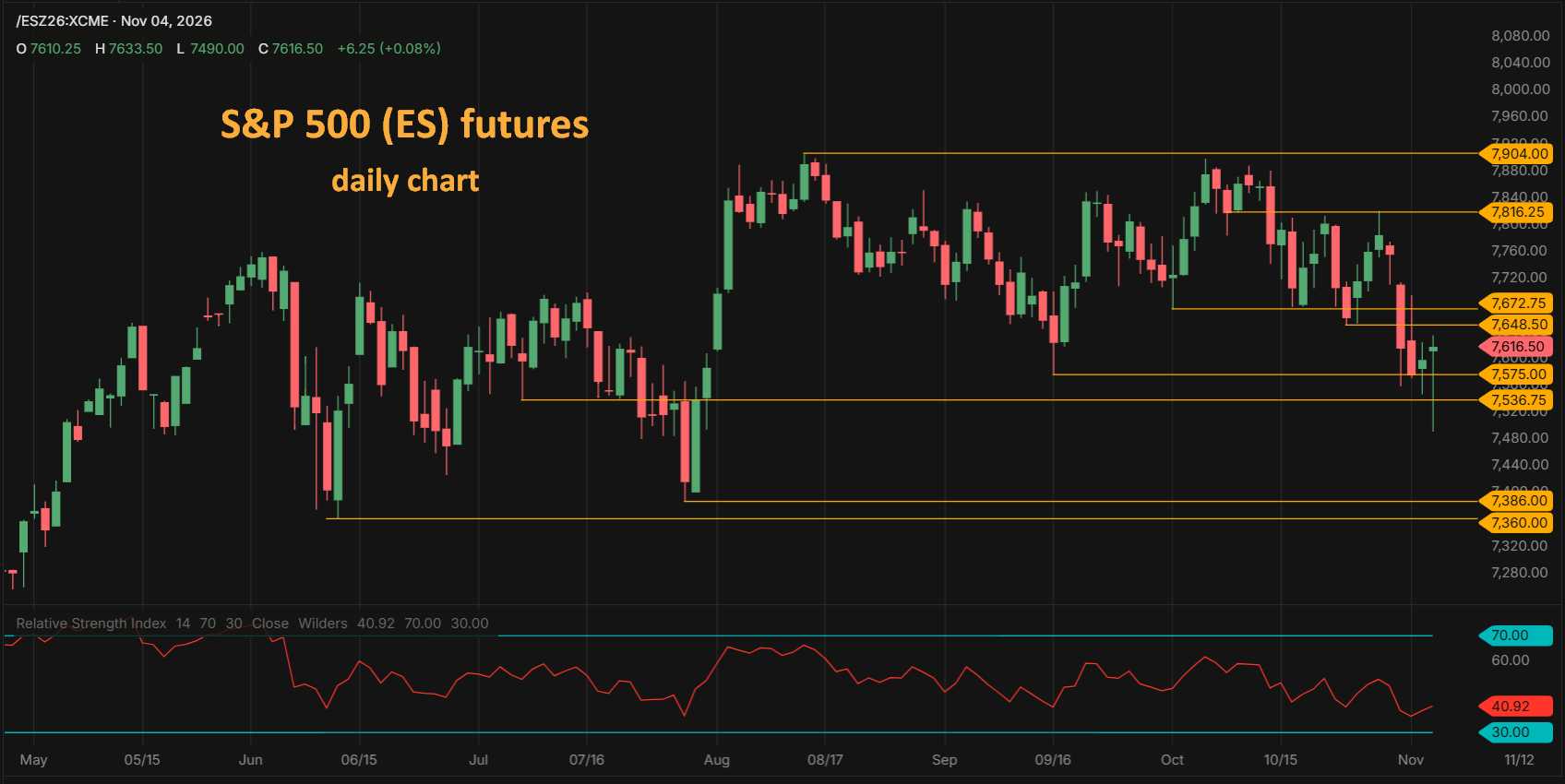
Markets outside of equities – from precious metals to crude oil and the dollar – also finished the day in wait-and-see mode, bracing to see what US voters would call forth. As it happened, Democrats scored a landslide victory. The party flipped seven Senate seats to wrest control of the upper legislative chamber with an outright 54-43 majority. In the House of Representatives, 47 seats swing the Democrats’ way to give them a 228-133 advantage. They also flipped four governorships their way in Iowa, Ohio, Georgia, and – shockingly – Texas.
Stocks and the dollar fell at first while Treasuries launched higher as the results washed over global markets. President Trump vowed to veto the incoming Congress’ agenda. The markets’ response then seemingly anticipated fiscal gridlock that puts the brakes on spending and throttles policymaking in key areas like AI regulation, perhaps alongside a new effort to force the end of the US-Iran war.
That first response quickly lost steam, however. S&P 500 and Nasdaq 100 futures erased losses of as much 1.4% and 2.4% respectively to trade flat before the opening bell on Wall Street.
The RBA may be sending an early warning
Ominous news came from Australia. The Reserve Bank of Australia (RBA) raised its benchmark rate by 25 basis points (bps) to 4.85%, an 18-year high and its fifth hike this year, but the decision was split 6-3. The central bank forecast slower growth in 2027 and cut language signaling a readiness to tighten further from the policy statement, even as it flagged lingering inflation risks from the US-Iran war and the global AI boom. The Australian dollar fell sharply, and futures markets now price a less hawkish RBA path than a month ago.
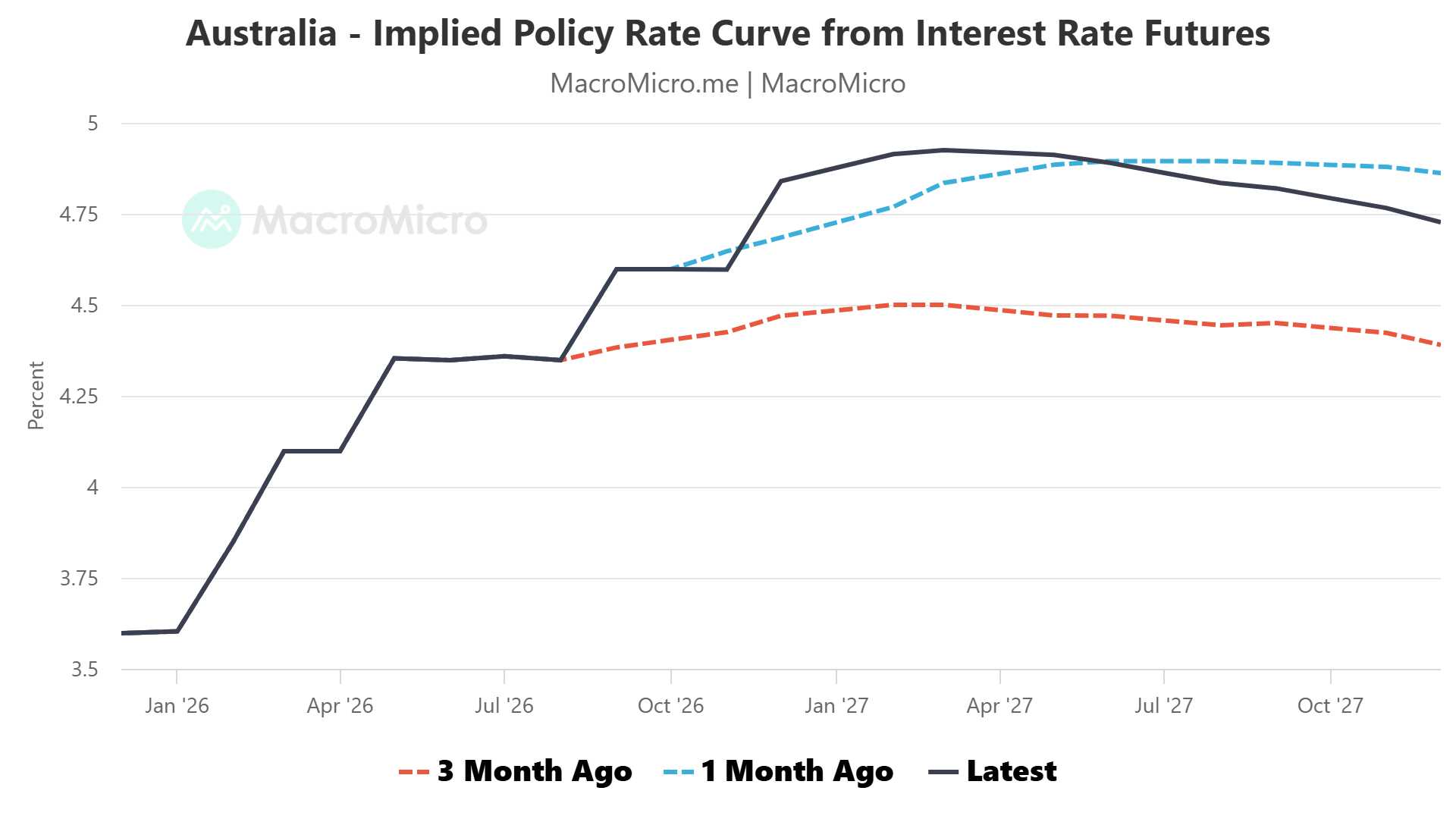
As a commodity exporter, Australia sits near the front of the global supply chain, so its economy can be an early barometer of shifts in worldwide demand. A central bank bracing for deceleration there may foreshadow what lies ahead elsewhere.
Why are Fed rate hike bets fading?
US data still looked sturdy on the surface. Job openings rose to 7.5 million in September, well above the 7.1 million expected, according to the Job Openings and Labor Turnover Survey (JOLTS). Layoffs fell to the lowest since March 2025, and the quits rate, a measure of voluntary departures, climbed to its highest in over a year. The jobs figures are backward-looking, however, and October’s payrolls report arrives Friday.
Markets have been paring Fed rate hike expectations through October anyway. A December increase is still seen as likely and is fully priced by January. But where two more hikes were fully priced for 2027 only recently, markets now price just one, and it is not fully discounted until June. The Fed itself projects none next year.
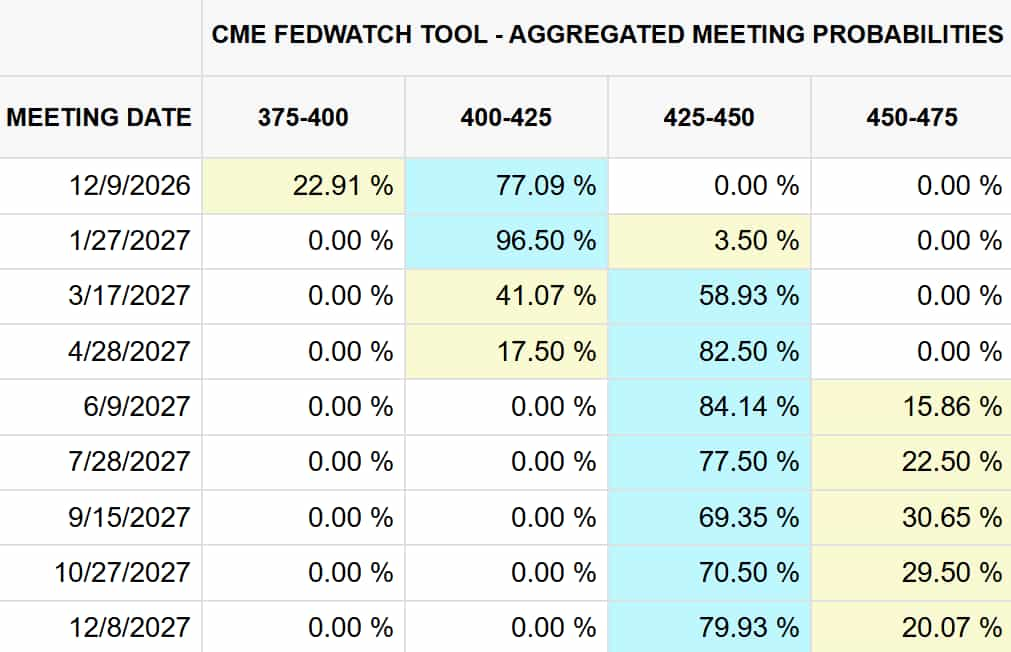
That disconnect echoes the RBA’s message. If a global slowdown is gathering, signs of it surfacing in commodity-linked economies like Australia may precede its arrival in US data. Last week’s GDP report showed how exposed the US economy is. Rising import costs more than erased the contribution from consumer spending, leaving growth resting almost entirely on investment in data centers. If the AI buildout slows, the economy would have little else to lean on.
Earlier this week, The manufacturing purchasing managers index (PMI) from the Institute for Supply Management (ISM) hit its second-highest reading in four years, but its details warned of a cooldown in the pipeline. The ISM services survey, covering the much larger services side of the economy, is expected to show steady growth at 54.8 in October, little changed from 54.9 in the prior month. Rate hike bets may keep fading if this too brings whispers of a slowdown, supporting bonds and weighing on the dollar. Under the circumstances, stocks are unlikely to be pleased.
Options involve risk and are not suitable for all investors. Please read Characteristics and Risks of Standardized Options before deciding to invest in options.
tastylive content is created, produced, and provided solely by tastylive, Inc. (“tastylive”) and is for informational and educational purposes only. It is not, nor is it intended to be, trading or investment advice or a recommendation that any security, futures contract, digital asset, other product, transaction, or investment strategy is suitable for any person. Trading securities, futures products, and digital assets involve risk and may result in a loss greater than the original amount invested. tastylive, through its content, financial programming or otherwise, does not provide investment or financial advice or make investment recommendations. Investment information provided may not be appropriate for all investors and is provided without respect to individual investor financial sophistication, financial situation, investing time horizon or risk tolerance. tastylive is not in the business of transacting securities trades, nor does it direct client commodity accounts or give commodity trading advice tailored to any particular client’s situation or investment objectives. Supporting documentation for any claims (including claims made on behalf of options programs), comparisons, statistics, or other technical data, if applicable, will be supplied upon request. tastylive is not a licensed financial adviser, registered investment adviser, or a registered broker-dealer. Options, futures, and futures options are not suitable for all investors. Prior to trading securities, options, futures, or futures options, please read the applicable risk disclosures, including, but not limited to, the Characteristics and Risks of Standardized Options Disclosure and the Futures and Exchange-Traded Options Risk Disclosure found on tastytrade.com/disclosures.
tastytrade, Inc. ("tastytrade”) is a registered broker-dealer and member of FINRA, NFA, and SIPC. tastytrade was previously known as tastyworks, Inc. (“tastyworks”). tastytrade offers self-directed brokerage accounts to its customers. tastytrade does not give financial or trading advice, nor does it make investment recommendations. You alone are responsible for making your investment and trading decisions and for evaluating the merits and risks associated with the use of tastytrade’s systems, services or products. tastytrade is a wholly-owned subsidiary of tastylive, Inc.
tastytrade has entered into a Marketing Agreement with tastylive (“Marketing Agent”) whereby tastytrade pays compensation to Marketing Agent to recommend tastytrade’s brokerage services. The existence of this Marketing Agreement should not be deemed as an endorsement or recommendation of Marketing Agent by tastytrade. tastytrade and Marketing Agent are separate entities with their own products and services. tastylive is the parent company of tastytrade.
tastyfx, LLC (“tastyfx”) is a Commodity Futures Trading Commission (“CFTC”) registered Retail Foreign Exchange Dealer (RFED) and Introducing Broker (IB) and Forex Dealer Member (FDM) of the National Futures Association (“NFA”) (NFA ID 0509630). Leveraged trading in foreign currency or off-exchange products on margin carries significant risk and may not be suitable for all investors. We advise you to carefully consider whether trading is appropriate for you based on your personal circumstances as you may lose more than you invest.
tastycrypto is provided solely by tasty Software Solutions, LLC. tasty Software Solutions, LLC is a separate but affiliate company of tastylive, Inc. Neither tastylive nor any of its affiliates are responsible for the products or services provided by tasty Software Solutions, LLC. Cryptocurrency trading is not suitable for all investors due to the number of risks involved. The value of any cryptocurrency, including digital assets pegged to fiat currency, commodities, or any other asset, may go to zero.
© copyright 2013 - 2026 tastylive, Inc. All Rights Reserved. Applicable portions of the Terms of Use on tastylive.com apply. Reproduction, adaptation, distribution, public display, exhibition for profit, or storage in any electronic storage media in whole or in part is prohibited under penalty of law, provided that you may download tastylive’s podcasts as necessary to view for personal use. tastylive was previously known as tastytrade, Inc. tastylive is a trademark/servicemark owned by tastylive, Inc.
Your privacy choices