What Are Warsh and Bessent Really Up To? See This Jobs Data

What Are Warsh and Bessent Really Up To? See This Jobs Data
By:Ilya Spivak
US jobs data looms large as traders try to figure out what tough talk from Kevin Warsh and scare tactics from Scott Bessent really mean for markets.
- The strongest services survey since February should have hardened the case for tightening, and rate hike bets did not move
- Long-dated bonds stopped at the same floor officials have now defended since late July
- The yen jumped roughly 3%, matching the size of earlier intervention moves, and no authority has owned it
Something changed overnight, and it turned major markets everywhere at once. The bellwether S&P 500 posted the largest one-day rally in a month, with the tech-heavy Nasdaq 100 climbing convincingly alongside it. Long-dated Treasury bonds rose from the range floor they’ve held since late July. Gold snapped back to erase the losses it suffered earlier in the week when a crude oil surge revived inflation worries, and the US dollar slipped against most major currencies.
That combination implies an obvious explanation. Stocks up, bonds up, gold up and the dollar down is what relief on the interest rate front looks like: risk appetite returns, a metal that yields nothing becomes easier to own, and the greenback loses some of its yield advantage. It all lines up. The trouble is that nothing happened to deliver that relief.
The data argued the other way
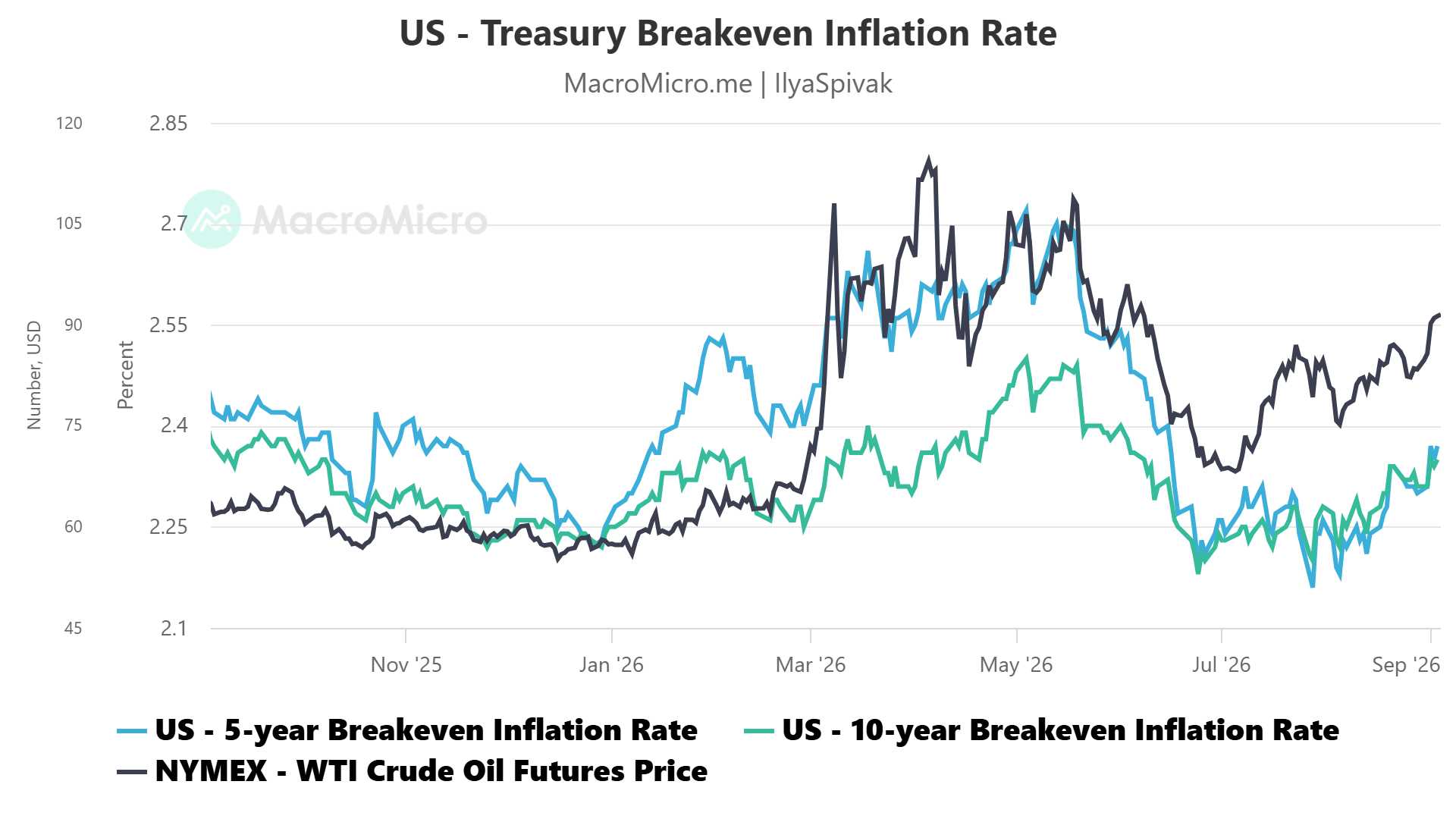
Start with oil, the would-be driver of near-term inflation fears. Crude rushed higher at the start of week and has not turned back, edging up to the three-month high instead. What’s more, breakeven inflation rates have started tracking oil prices again having ignored them in July and most of August, huddling at pre-war lows even as crude trended higher. They’ve now recoupled, meaning that rising prices ought to beckon a more hawkish central bank.
The economic news was no help either. Service sector purchasing managers index (PMI) data from the Institute for Supply Management (ISM) delivered the fastest growth since February, comfortably beating forecasts. Business activity accelerated, new orders surged, and the survey’s price measures surged with them. Such data make the textbook case for tightening, painting a picture of precisely the economy that troubles Fed Chair Kevin Warsh when he talks up restoring price stability.
Rate expectations barely budged, despite the news flow seemingly lining up neatly with the hawkish message in Warsh’s Jackson Hole speech that markets readily onboarded. The Fed chief talked up the odds of one hike by year-end from just over 70% to 90% and the chance of two of them from 30% to better than even. Handed a red-hot ISM report and buoyant oil price, traders seemed to look the other way.
The level markets are afraid to test
Explaining what transpired seems to start with the bond market. The 30-year has now bounced from the same floor repeatedly since late July, when the Treasury first signaled it disliked the direction of long-term yields. That signal came through a joint intervention with Japanese authorities to support the yen, structured so Tokyo could buy its currency without selling dollar assets. Japan imports nearly all its food and energy, which makes a weak yen a major cost-of-living problem. US authorities pointedly stepped in to ensure that taking pressure off the currency wouldn’t mean driving up US borrowing costs.
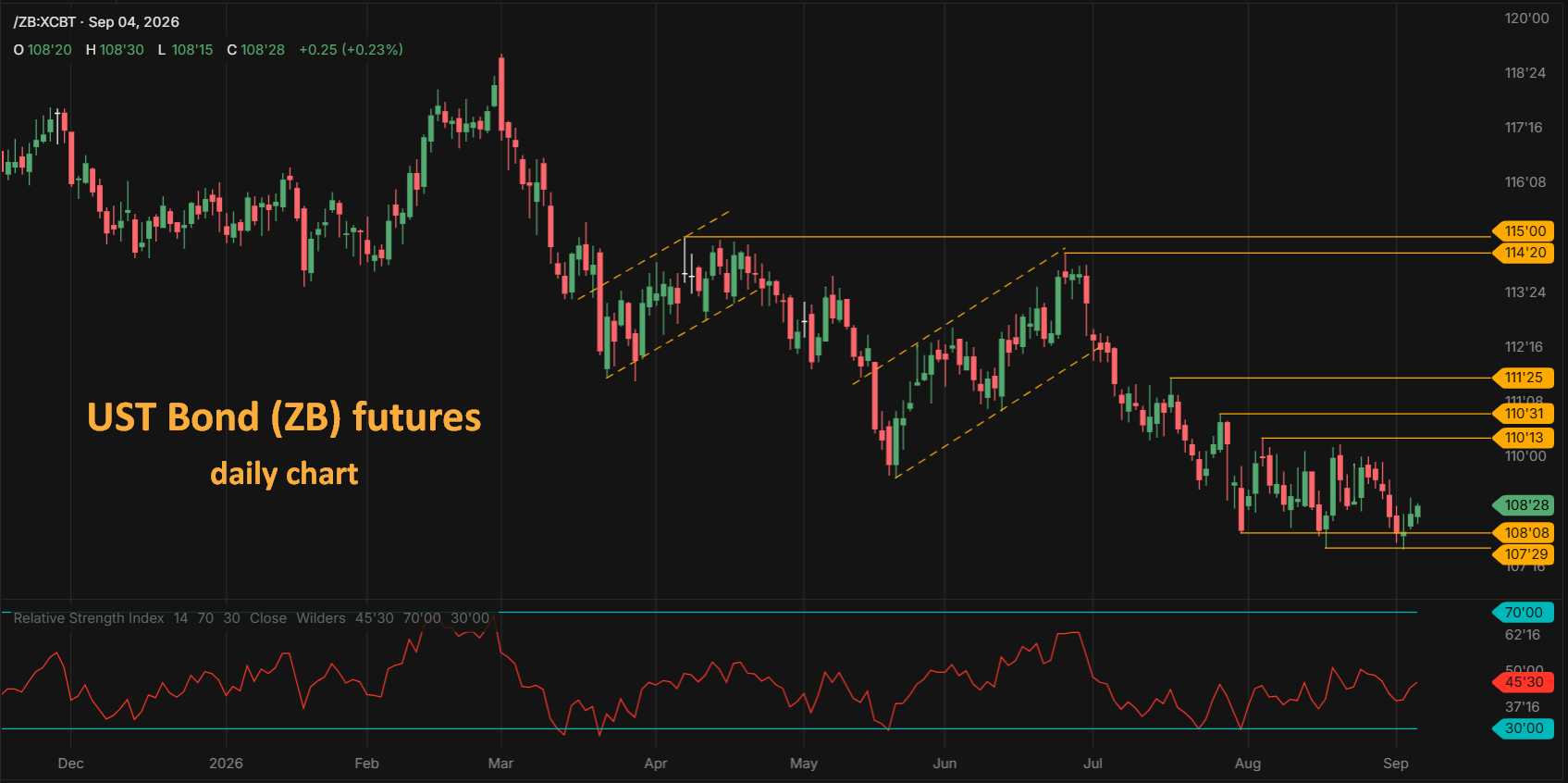
When markets probed the same level again, Treasury Secretary Scott Bessent doubled the size of bond buyback operations from $2 to $4 billion. That sum changes nothing mechanically in a market this size, and it was likely never meant to. Bessent himself spoke of the move as signaling in a CNBC interview. Now bonds have bounced from the range bottom anew, and again the yen spiked in tandem. The scale of the jump seems comparable to earlier interventions, though this time no authority on either side of the Pacific has claimed it.
All eyes on US jobs data
Whether anyone actually intervened may not matter. Markets who have watched the Treasury step in to prop up the 30-year bond at the same level twice are unlikely to want to be on the wrong side of that happening a third time. They may have backed away from that level on their own, and once they did, the appearance of rate relief spread into gold, equities and the dollar without any policy official having to lift a finger.
That leaves the incoming US jobs report as the next big test. Forecasters expect 56,000 jobs added in August after the prior month’s 23,000 decline, with the unemployment rate steady at 4.1%. A strong print will ask whether traders are ready to pile into rate hike bets or shrug again because the Treasury is muddying the reaction function. A soft one might line up with what officials seem to want, extending the move already underway. Watching which way the markets jump will reveal what is genuinely steering them, the state of the economy or the shadow of an intervention.
Ilya Spivak, tastylive Head of Global Macro, has over 15 years of experience in trading strategy. He specializes in identifying thematic moves in currencies, commodities, interest rates and equities. He hosts Macro Money and co-hosts Overtime, Monday-Thursday. @Ilyaspivak
For live daily programming, market news and commentary, visit tastylive.com or @tastyliveshow on YouTube
Trade with a better broker, open a tastytrade account today. tastylive, Inc. and tastytrade, Inc. are separate but affiliated companies.
Options involve risk and are not suitable for all investors. Please read Characteristics and Risks of Standardized Options before deciding to invest in options.
tastylive content is created, produced, and provided solely by tastylive, Inc. (“tastylive”) and is for informational and educational purposes only. It is not, nor is it intended to be, trading or investment advice or a recommendation that any security, futures contract, digital asset, other product, transaction, or investment strategy is suitable for any person. Trading securities, futures products, and digital assets involve risk and may result in a loss greater than the original amount invested. tastylive, through its content, financial programming or otherwise, does not provide investment or financial advice or make investment recommendations. Investment information provided may not be appropriate for all investors and is provided without respect to individual investor financial sophistication, financial situation, investing time horizon or risk tolerance. tastylive is not in the business of transacting securities trades, nor does it direct client commodity accounts or give commodity trading advice tailored to any particular client’s situation or investment objectives. Supporting documentation for any claims (including claims made on behalf of options programs), comparisons, statistics, or other technical data, if applicable, will be supplied upon request. tastylive is not a licensed financial adviser, registered investment adviser, or a registered broker-dealer. Options, futures, and futures options are not suitable for all investors. Prior to trading securities, options, futures, or futures options, please read the applicable risk disclosures, including, but not limited to, the Characteristics and Risks of Standardized Options Disclosure and the Futures and Exchange-Traded Options Risk Disclosure found on tastytrade.com/disclosures.
tastytrade, Inc. ("tastytrade”) is a registered broker-dealer and member of FINRA, NFA, and SIPC. tastytrade was previously known as tastyworks, Inc. (“tastyworks”). tastytrade offers self-directed brokerage accounts to its customers. tastytrade does not give financial or trading advice, nor does it make investment recommendations. You alone are responsible for making your investment and trading decisions and for evaluating the merits and risks associated with the use of tastytrade’s systems, services or products. tastytrade is a wholly-owned subsidiary of tastylive, Inc.
tastytrade has entered into a Marketing Agreement with tastylive (“Marketing Agent”) whereby tastytrade pays compensation to Marketing Agent to recommend tastytrade’s brokerage services. The existence of this Marketing Agreement should not be deemed as an endorsement or recommendation of Marketing Agent by tastytrade. tastytrade and Marketing Agent are separate entities with their own products and services. tastylive is the parent company of tastytrade.
tastyfx, LLC (“tastyfx”) is a Commodity Futures Trading Commission (“CFTC”) registered Retail Foreign Exchange Dealer (RFED) and Introducing Broker (IB) and Forex Dealer Member (FDM) of the National Futures Association (“NFA”) (NFA ID 0509630). Leveraged trading in foreign currency or off-exchange products on margin carries significant risk and may not be suitable for all investors. We advise you to carefully consider whether trading is appropriate for you based on your personal circumstances as you may lose more than you invest.
tastycrypto is provided solely by tasty Software Solutions, LLC. tasty Software Solutions, LLC is a separate but affiliate company of tastylive, Inc. Neither tastylive nor any of its affiliates are responsible for the products or services provided by tasty Software Solutions, LLC. Cryptocurrency trading is not suitable for all investors due to the number of risks involved. The value of any cryptocurrency, including digital assets pegged to fiat currency, commodities, or any other asset, may go to zero.
© copyright 2013 - 2026 tastylive, Inc. All Rights Reserved. Applicable portions of the Terms of Use on tastylive.com apply. Reproduction, adaptation, distribution, public display, exhibition for profit, or storage in any electronic storage media in whole or in part is prohibited under penalty of law, provided that you may download tastylive’s podcasts as necessary to view for personal use. tastylive was previously known as tastytrade, Inc. tastylive is a trademark/servicemark owned by tastylive, Inc.
Your privacy choices