Why are the Markets Suddenly Rejecting the Top Trades of 2026?

Why are the Markets Suddenly Rejecting the Top Trades of 2026?
By:Ilya Spivak
Tech stocks led a selloff as bonds surged and the US dollar failed to find a haven bid. Even gold and silver were swept up. Are the markets’ favorite trades going into reverse?
- Big tech dragged stocks lower, while most S&P 500 members held up on an equal-weighted basis
- Treasury bonds surged and the US dollar failed to catch a haven bid despite the risk-off mood
- Markets trimmed Fed rate hike bets, with the odds of a December move falling to about 77%
The trades that have powered markets this year, buying AI and tech stocks and selling bonds, went sharply into reverse. The S&P 500 erased three days of gains, turning lower from the underside of the range it broke last week and returning to challenge its early-October low. The bounce from last week’s selloff now looks like a correction within a broader move lower.
The tech-heavy Nasdaq 100 fared worse, breaking below the range floor the S&P 500 is still trying to hold. The small-cap Russell 2000, with far less tech exposure, was roughly flat, though it remains stuck within the downtrend in place since mid-August.
The damage was concentrated. On an equal-weighted basis, more S&P 500 stocks rose than fell. The selling focused on the megacap tech names that have come to dominate the index during the AI boom, and their weight was enough to drag the benchmarks lower.
The US dollar can’t find a haven bid
Capital seems to be flowing into bonds. Treasuries surged, extending a rally that has run through October. Crude oil edged up but its influence has pointedly waned this month, signaling the markets are looking through the “war trade” inflation scare shaping price action since the US-Iran conflict broke out in late February.
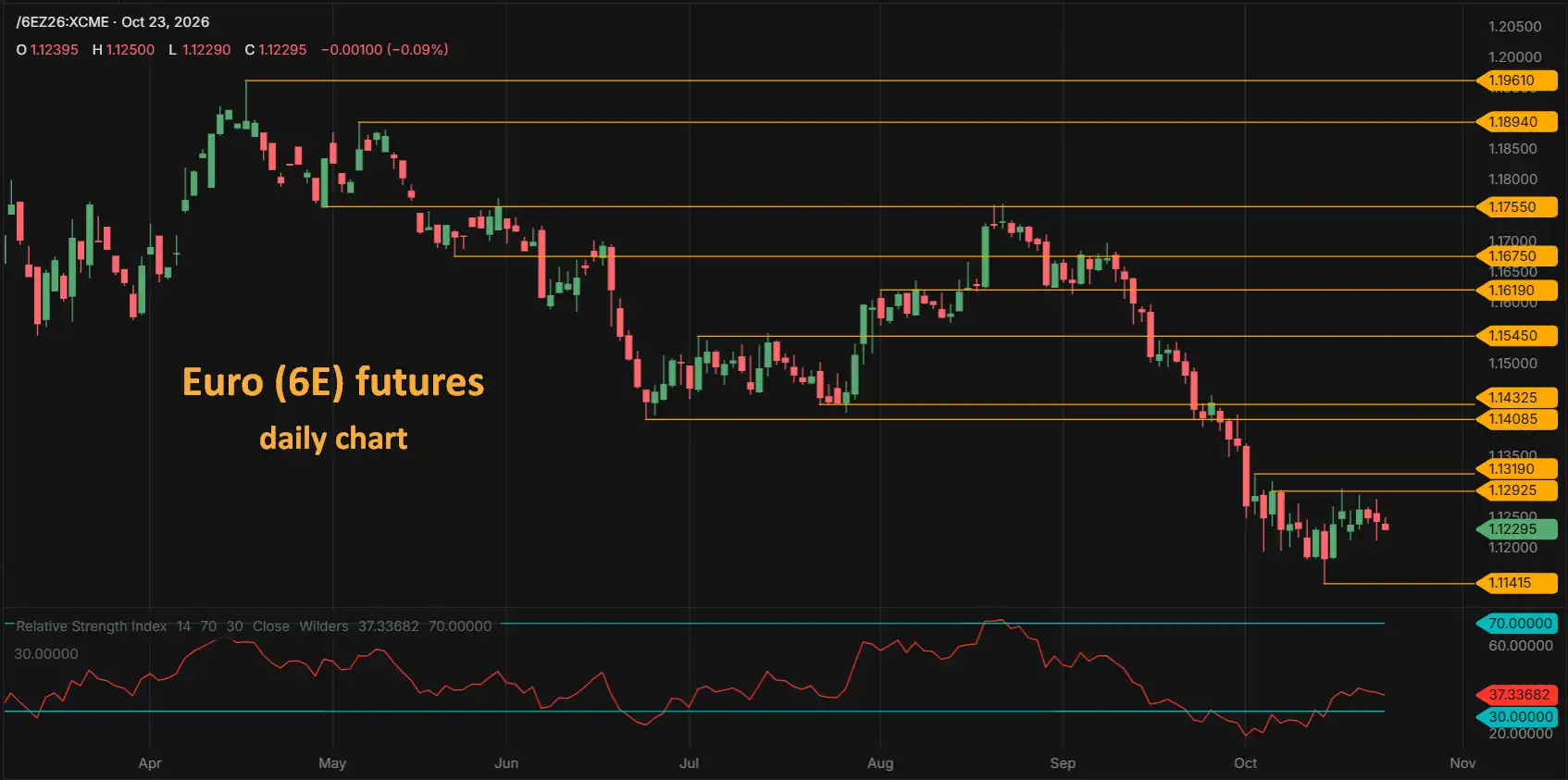
The US dollar’s response is perhaps the most telling. In times of stress, investors typically retreat to cash, and the greenback’s unrivaled liquidity makes it the destination of choice. That haven bid did not materialize. The yield spread between French and German government bonds is now wider than at any point in the 2010-2011 Eurozone debt crisis, a level of stress last seen in 1999, when markets doubted the newly created euro. Even so, the single currency heroically held its ground against the dollar.
Other currencies did better still. The British pound broke higher, the Canadian dollar kept climbing, and the Australian dollar waved off selling pressure despite a risk-off mood that usually weighs on it. One explanation is that selling US tech stocks means selling dollar-denominated assets. If foreign capital is heading home rather than parking in US cash, the greenback loses out.
Gold and silver did not benefit, however. Lower yields and a weaker dollar would typically support them. Instead, both broke below the bottoms of their recent ranges, apparently caught up in a broader speculative flush. Bitcoin dipped too but narrowly defended chart support.
Are rate hike bets fading for the wrong reasons?
The selloff did not stem from bad corporate news. According to FactSet data through October 16, tech companies have delivered some of the strongest earnings surprises of the season, second only to the healthcare sector. Yet companies beating forecasts have seen an average decline of 0.2% in the four days around their results, compared with a five-year average gain of almost 1%. Blended third-quarter earnings growth is pacing at 29%, just below the 29.2% expected a month ago. Results are validating forecasts without offering anything new, and markets seem to be losing patience.
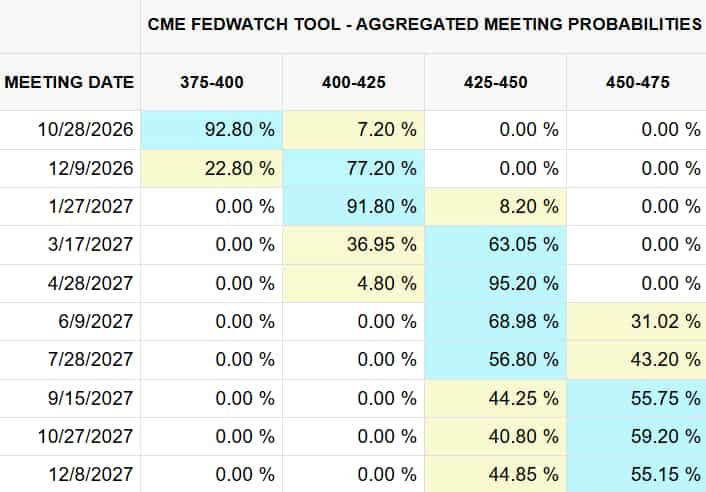
Rate hike expectations softened sharply. Fed funds futures put the odds of a hold at next week’s meeting near 93%. More notably, the probability of a 25-basis-point (bps) hike in December fell to around 77% after being treated as a foregone conclusion a day earlier. A hike is fully priced by January, with one more expected toward the end of 2027. That leaves two hikes priced from here, down from three when the week began.
Growth worries may be what tipped sentiment. The Atlanta Fed’s GDPNow model has slid from a peak of 6% to 3.5% for the third quarter over the past two and a half months, as incoming data have weighed on the outlook. Official GDP figures arrive next week. Before that, flash purchasing managers index (PMI) data from S&P Global will offer a timely read on the economy.
If the PMIs disappoint, bonds may rally further, the US dollar could weaken more, and additional rate hikes may come off the board. Stocks are unlikely to take comfort, however. That is the bad kind of relief from tightening, driven by slower growth that threatens earnings.
Ilya Spivak, tastylive Head of Global Macro, has over 15 years of experience in trading strategy. He specializes in identifying thematic moves in currencies, commodities, interest rates and equities. He hosts Macro Money and co-hosts Overtime, Monday-Thursday. @Ilyaspivak
For live daily programming, market news and commentary, visit tastylive.com or @tastyliveshow on YouTube
Trade with a better broker, open a tastytrade account today. tastylive, Inc. and tastytrade, Inc. are separate but affiliated companies.
Options involve risk and are not suitable for all investors. Please read Characteristics and Risks of Standardized Options before deciding to invest in options.
tastylive content is created, produced, and provided solely by tastylive, Inc. (“tastylive”) and is for informational and educational purposes only. It is not, nor is it intended to be, trading or investment advice or a recommendation that any security, futures contract, digital asset, other product, transaction, or investment strategy is suitable for any person. Trading securities, futures products, and digital assets involve risk and may result in a loss greater than the original amount invested. tastylive, through its content, financial programming or otherwise, does not provide investment or financial advice or make investment recommendations. Investment information provided may not be appropriate for all investors and is provided without respect to individual investor financial sophistication, financial situation, investing time horizon or risk tolerance. tastylive is not in the business of transacting securities trades, nor does it direct client commodity accounts or give commodity trading advice tailored to any particular client’s situation or investment objectives. Supporting documentation for any claims (including claims made on behalf of options programs), comparisons, statistics, or other technical data, if applicable, will be supplied upon request. tastylive is not a licensed financial adviser, registered investment adviser, or a registered broker-dealer. Options, futures, and futures options are not suitable for all investors. Prior to trading securities, options, futures, or futures options, please read the applicable risk disclosures, including, but not limited to, the Characteristics and Risks of Standardized Options Disclosure and the Futures and Exchange-Traded Options Risk Disclosure found on tastytrade.com/disclosures.
tastytrade, Inc. ("tastytrade”) is a registered broker-dealer and member of FINRA, NFA, and SIPC. tastytrade was previously known as tastyworks, Inc. (“tastyworks”). tastytrade offers self-directed brokerage accounts to its customers. tastytrade does not give financial or trading advice, nor does it make investment recommendations. You alone are responsible for making your investment and trading decisions and for evaluating the merits and risks associated with the use of tastytrade’s systems, services or products. tastytrade is a wholly-owned subsidiary of tastylive, Inc.
tastytrade has entered into a Marketing Agreement with tastylive (“Marketing Agent”) whereby tastytrade pays compensation to Marketing Agent to recommend tastytrade’s brokerage services. The existence of this Marketing Agreement should not be deemed as an endorsement or recommendation of Marketing Agent by tastytrade. tastytrade and Marketing Agent are separate entities with their own products and services. tastylive is the parent company of tastytrade.
tastyfx, LLC (“tastyfx”) is a Commodity Futures Trading Commission (“CFTC”) registered Retail Foreign Exchange Dealer (RFED) and Introducing Broker (IB) and Forex Dealer Member (FDM) of the National Futures Association (“NFA”) (NFA ID 0509630). Leveraged trading in foreign currency or off-exchange products on margin carries significant risk and may not be suitable for all investors. We advise you to carefully consider whether trading is appropriate for you based on your personal circumstances as you may lose more than you invest.
tastycrypto is provided solely by tasty Software Solutions, LLC. tasty Software Solutions, LLC is a separate but affiliate company of tastylive, Inc. Neither tastylive nor any of its affiliates are responsible for the products or services provided by tasty Software Solutions, LLC. Cryptocurrency trading is not suitable for all investors due to the number of risks involved. The value of any cryptocurrency, including digital assets pegged to fiat currency, commodities, or any other asset, may go to zero.
© copyright 2013 - 2026 tastylive, Inc. All Rights Reserved. Applicable portions of the Terms of Use on tastylive.com apply. Reproduction, adaptation, distribution, public display, exhibition for profit, or storage in any electronic storage media in whole or in part is prohibited under penalty of law, provided that you may download tastylive’s podcasts as necessary to view for personal use. tastylive was previously known as tastytrade, Inc. tastylive is a trademark/servicemark owned by tastylive, Inc.
Your privacy choices