The Treasury Bond Buyback Is Not QE. Here Is What It Really Is.
The Treasury Bond Buyback Is Not QE. Here Is What It Really Is.
By:Ilya Spivak
Gold surged, the US dollar sank, and long-term bonds staged a scorching rally after the Treasury Department tweaked a debt buyback program. Why does this matter so much for the markets?
- The Treasury doubled its buybacks of older long-dated bonds, but the sum is too small to matter mechanically
- Coming a day after 30-year yields hit a 19-year high, it told markets the government is watching the long end of the Treasuries curve
- The action landed because gold, bonds, and the dollar were already primed to move that way
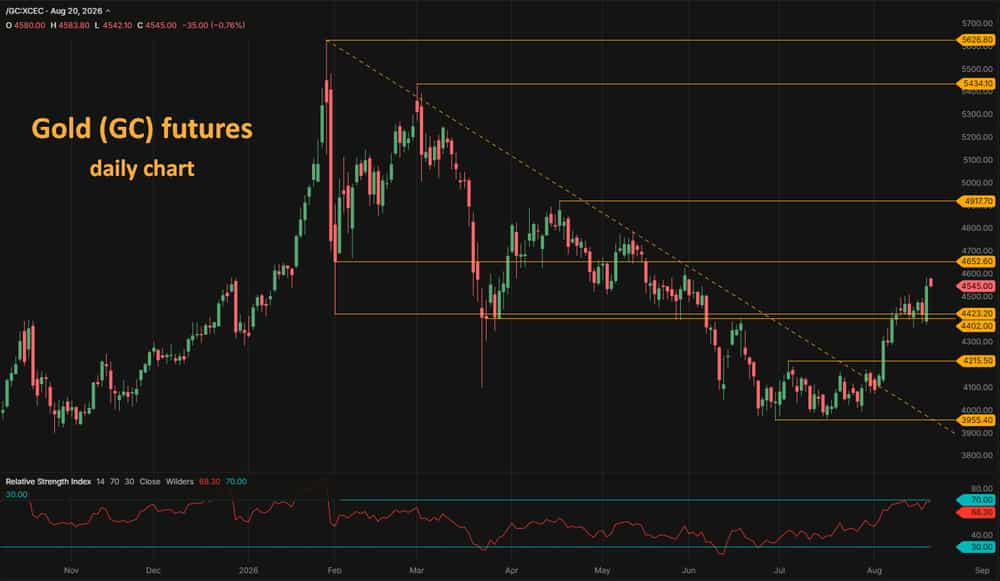
Gold prices and long-term bonds sailed higher together while the US dollar plunged as the Treasury Department stepped in to check surging yields. The yellow metal jumped 4.35%, its biggest one-day rise since early February. The greenback shed 0.65% against an average of major currencies, its biggest one-day loss in three weeks. The 30-year Treasury bond rallied 1.2%, the most in ten months.
What the Treasury actually announced
The catalyst was a relatively modest change to an existing program. The Treasury Department buys back stale, off-the-run long-dated bonds, and had capped those operations at $2 billion apiece. It will now do double that, purchasing at least $4 billion at a time.
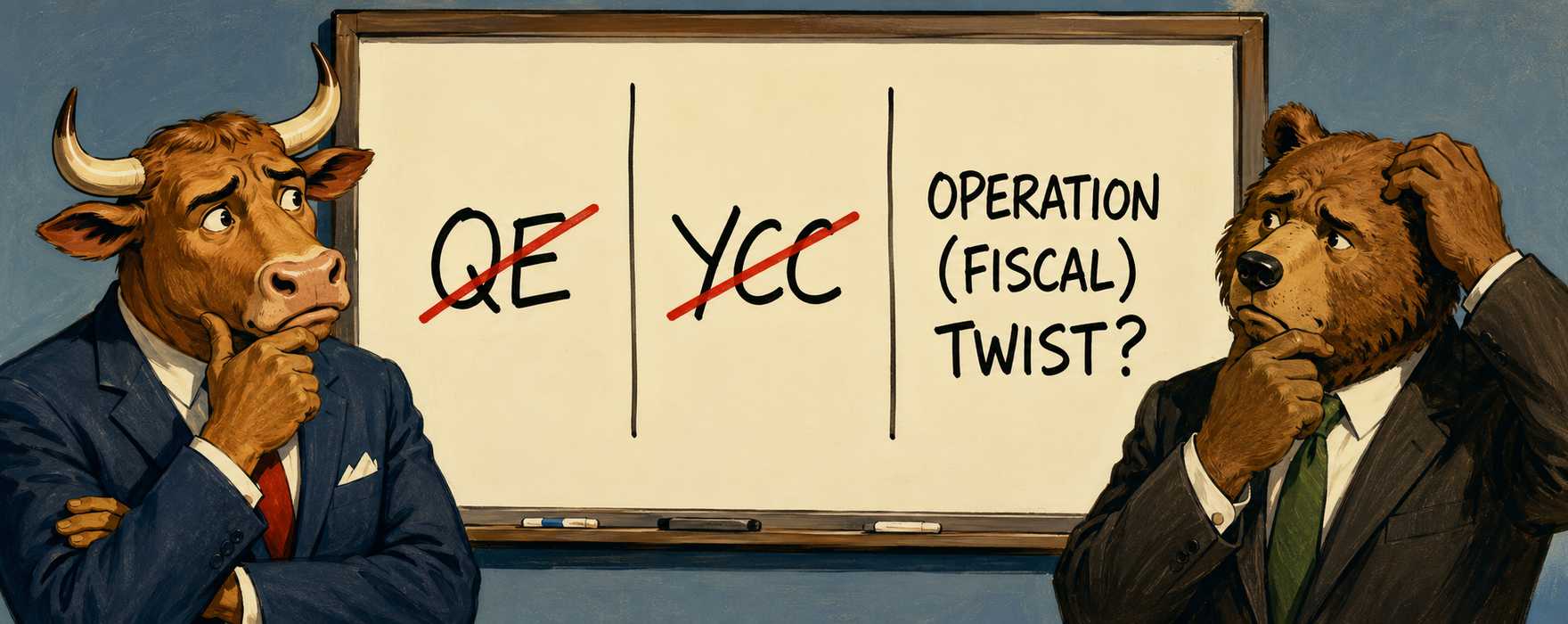
Precision matters here, because the chatter has run ahead of the facts. This is not quantitative easing (QE): the Treasury cannot create money, only the Federal Reserve can. Nor is it yield curve control (YCC), which implies a defended target, as when the Bank of Japan capped its 10-year yield. There is no defined target or cap here.
Instead, what this resembles is a Treasury version of the Fed’s Operation Twist, altering the maturity structure of outstanding government debt. In fact, issuance has long since skewed toward short-term bills. In essence, Treasury Secretary Scott Bessent is embracing the same logic as his predecessor Janet Yellen, who leaned on cheaper short-term borrowing to manage the interest bill.
Why $4 billion moved a $30 trillion market
Mechanically, the sum seems trivial. The Treasury market has close to $31 trillion in outstanding bonds. On an average day, cash Treasuries turn over about $1.2 trillion, the futures market adds hundreds of billions more, and repo financing activity amounts to another $4 trillion or so. Against all that, a $4 billion buying operation barely registers as a rounding error.
The power was in the timing and the message. One day after the 30-year yield spiked to its highest in 19 years, the government signaled it is watching the long end and would prefer nothing strange happen there. That is potent jawboning, a clear statement of intent, even without a splashier capital outlay behind it. Markets were not manhandled; they read the implication and did the work themselves. The curve duly flattened, the front end barely moving while the gap between two- and 30-year yields compressed sharply.
Stocks and the oil market looked the other way
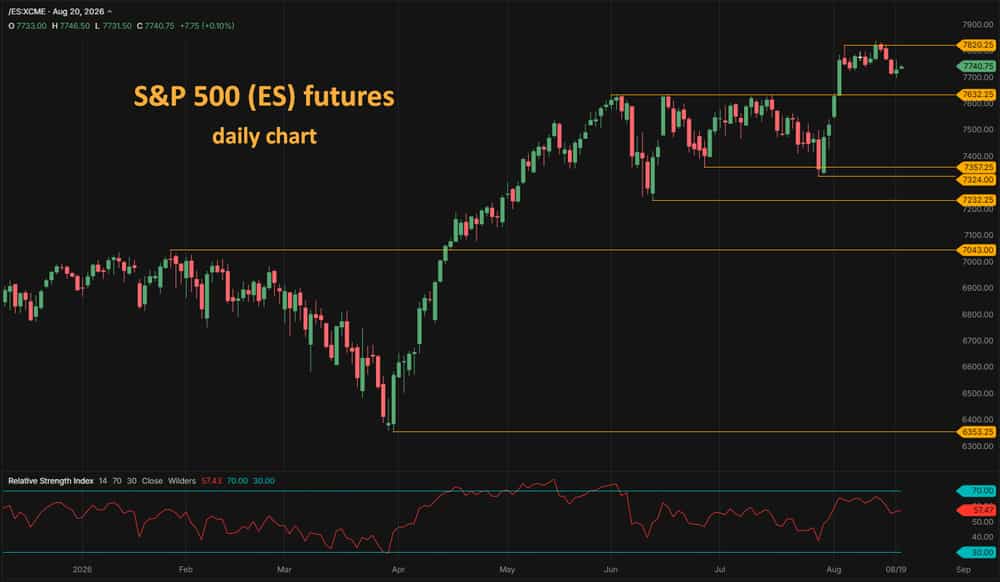
For all the fire and fury elsewhere, stocks were oddly quiet. The bellwether S&P 500 has been backing into the range top it broke earlier this month without giving it up, and the tech-heavy Nasdaq 100 looks soggier still, back-testing an old resistance level that has since served as support. If yesterday’s slide really was about borrowing costs spiking, then today’s violent move in the opposite direction should have produced a rally. It did not.
Crude oil offered nothing either. Prices are hovering near the upper end of the broad range in play since the US-Iran war erupted in late February. Major swing highs and lows have narrowed inward over that period even as Washington and Tehran appear to abandon any pretense of wanting a ceasefire. This hints that the market is losing the appetite to jump at headlines. Instead, it seems to be becoming acclimated to the idea of a long slog ahead.
The Fed minutes gave the green light
Minutes from July’s Federal Open Market Committee (FOMC) meeting landed the same day, and their job was simply to avoid sounding more hawkish than markets already feared. They managed it. Many participants judged higher rates would be needed if inflation failed to fall, but it has fallen since. The three dissenting policymakers who wanted a 25-basis-point (bps) hike last month saw such a move as forestalling later tightening, which sounds like a call for front-loading rather than a more aggressive cycle.
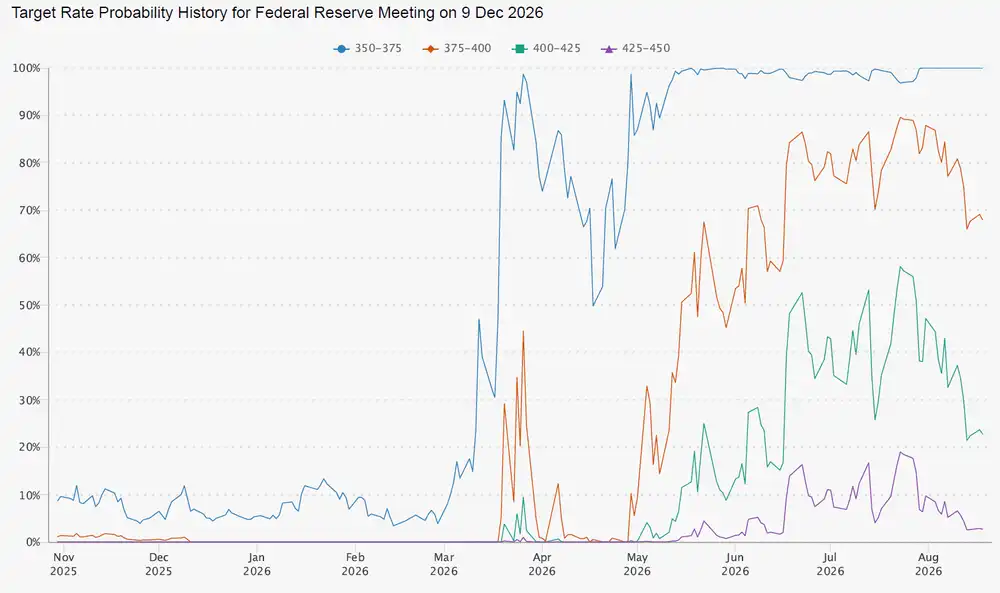
Nothing there argues against the steady erosion in rate hike bets since the start of August. Futures still favor no change in September, treat October as a coin toss, and lean toward one hike by December, with little conviction beyond it. The reason sits in the data. The Atlanta Fed’s GDPNow model has cut its third-quarter growth estimate from around 6% at the start of August to 4% now, a two-point slide in three weeks. The actual figures land in October, so for now, the direction of the model’s evolution is the signal. Citigroup’s economic surprise index has deteriorated all month. Breakeven inflation rates refuse to budge even as crude oil rebounds, sitting where they began the year and recently testing even lower. Markets seem to think that any inflationary push from energy might be swamped by something larger: economic weakness.
What the long end was really pricing
This is where the Treasury’s jawboning becomes interesting. The surge in long-term borrowing costs the Treasury is leaning against was never really a Fed story. If a downturn arrives while inflation still sits above target, central banks cannot cut aggressively to fight it, which leaves the job to fiscal authorities. Fighting a slump with the budget means borrowing and spending more, and it is that prospective bill that the long end has been pricing, and not just in the US. In fact, analog rates have posted bigger gains Japan, the UK, France, Italy, and Germany.
That might explain why a relatively small a nudge from the Treasury produced so large a reaction. The markets were already questioning whether rates had gone up too far. Gold spent July refusing to fall even as real yields climbed to their highest since April 2025, typically kryptonite for an asset yielding nothing, and has now sprung to its highest since June. The dollar declined to rally through that stretch despite the improving return on holding it, and took a shellacking today. The 30-year spiked to a 19-year high yesterday, could not hold it, and reversed back inside its range before today’s rally. Purchasing managers index (PMI) surveys from Japan, Australia and the eurozone arrive late this week, with the US to follow. Should they confirm demand destruction is spreading, the Treasury may find calming the long end is the easier half of its problem.
Ilya Spivak, tastylive Head of Global Macro, has over 15 years of experience in trading strategy. He specializes in identifying thematic moves in currencies, commodities, interest rates and equities. He hosts Macro Money and co-hosts Overtime, Monday-Thursday. @Ilyaspivak
For live daily programming, market news and commentary, visit tastylive.com or @tastyliveshow on YouTube
Trade with a better broker, open a tastytrade account today. tastylive, Inc. and tastytrade, Inc. are separate but affiliated companies.
Options involve risk and are not suitable for all investors. Please read Characteristics and Risks of Standardized Options before deciding to invest in options.
tastylive content is created, produced, and provided solely by tastylive, Inc. (“tastylive”) and is for informational and educational purposes only. It is not, nor is it intended to be, trading or investment advice or a recommendation that any security, futures contract, digital asset, other product, transaction, or investment strategy is suitable for any person. Trading securities, futures products, and digital assets involve risk and may result in a loss greater than the original amount invested. tastylive, through its content, financial programming or otherwise, does not provide investment or financial advice or make investment recommendations. Investment information provided may not be appropriate for all investors and is provided without respect to individual investor financial sophistication, financial situation, investing time horizon or risk tolerance. tastylive is not in the business of transacting securities trades, nor does it direct client commodity accounts or give commodity trading advice tailored to any particular client’s situation or investment objectives. Supporting documentation for any claims (including claims made on behalf of options programs), comparisons, statistics, or other technical data, if applicable, will be supplied upon request. tastylive is not a licensed financial adviser, registered investment adviser, or a registered broker-dealer. Options, futures, and futures options are not suitable for all investors. Prior to trading securities, options, futures, or futures options, please read the applicable risk disclosures, including, but not limited to, the Characteristics and Risks of Standardized Options Disclosure and the Futures and Exchange-Traded Options Risk Disclosure found on tastytrade.com/disclosures.
tastytrade, Inc. ("tastytrade”) is a registered broker-dealer and member of FINRA, NFA, and SIPC. tastytrade was previously known as tastyworks, Inc. (“tastyworks”). tastytrade offers self-directed brokerage accounts to its customers. tastytrade does not give financial or trading advice, nor does it make investment recommendations. You alone are responsible for making your investment and trading decisions and for evaluating the merits and risks associated with the use of tastytrade’s systems, services or products. tastytrade is a wholly-owned subsidiary of tastylive, Inc.
tastytrade has entered into a Marketing Agreement with tastylive (“Marketing Agent”) whereby tastytrade pays compensation to Marketing Agent to recommend tastytrade’s brokerage services. The existence of this Marketing Agreement should not be deemed as an endorsement or recommendation of Marketing Agent by tastytrade. tastytrade and Marketing Agent are separate entities with their own products and services. tastylive is the parent company of tastytrade.
tastyfx, LLC (“tastyfx”) is a Commodity Futures Trading Commission (“CFTC”) registered Retail Foreign Exchange Dealer (RFED) and Introducing Broker (IB) and Forex Dealer Member (FDM) of the National Futures Association (“NFA”) (NFA ID 0509630). Leveraged trading in foreign currency or off-exchange products on margin carries significant risk and may not be suitable for all investors. We advise you to carefully consider whether trading is appropriate for you based on your personal circumstances as you may lose more than you invest.
tastycrypto is provided solely by tasty Software Solutions, LLC. tasty Software Solutions, LLC is a separate but affiliate company of tastylive, Inc. Neither tastylive nor any of its affiliates are responsible for the products or services provided by tasty Software Solutions, LLC. Cryptocurrency trading is not suitable for all investors due to the number of risks involved. The value of any cryptocurrency, including digital assets pegged to fiat currency, commodities, or any other asset, may go to zero.
© copyright 2013 - 2026 tastylive, Inc. All Rights Reserved. Applicable portions of the Terms of Use on tastylive.com apply. Reproduction, adaptation, distribution, public display, exhibition for profit, or storage in any electronic storage media in whole or in part is prohibited under penalty of law, provided that you may download tastylive’s podcasts as necessary to view for personal use. tastylive was previously known as tastytrade, Inc. tastylive is a trademark/servicemark owned by tastylive, Inc.
Your privacy choices